Pillar
Fasting
A gentle, self-directed fasting framework for weight loss, metabolic recovery, and long-term maintenance.
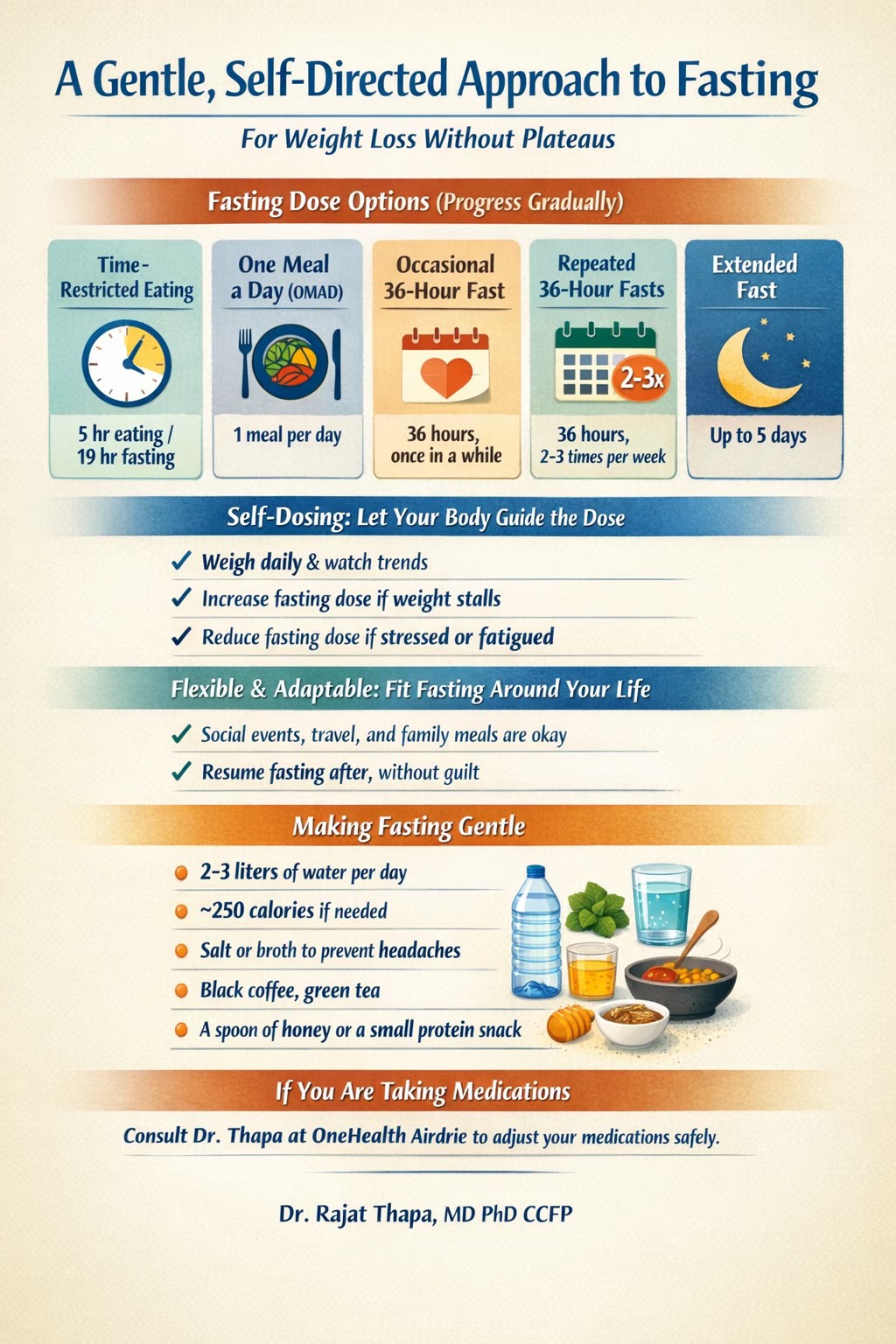
A Gentle, Self-Directed Approach to Fasting
For weight loss without plateaus
Fasting is not a one-size-fits-all prescription. Different people require different doses depending on insulin resistance, metabolism, lifestyle, and life circumstances.
This framework is self-directed. You decide the dose your body needs.
Fasting Dose Options (Progress Gradually)
Option 1 - Time-Restricted Eating
- Eating window: about 5 hours
- Fasting window: about 19 hours
Option 2 - One Meal a Day (OMAD)
- One main meal per day
- No grazing or snacking outside the meal
Option 3 - Occasional 36-Hour Fast
- One 36-hour fast (for example, dinner to breakfast two days later)
- Used periodically
Option 4 - Repeated 36-Hour Fasts
- 36-hour fasts 2-3 times per week
- Typically chosen after adaptation
Option 5 - Extended Fast
- Up to 5 days
- Intended only for experienced individuals
- Not suitable for everyone
Self-Dosing: Let Your Body Guide the Dose
- Weigh daily and focus on trends, not day-to-day fluctuations
- If weight and measurements are improving, the dose is likely sufficient
- If you hit a plateau for a sustained period, some people choose to increase the fasting dose
- If stress, fatigue, illness, or life demands increase, it is reasonable to reduce the dose
Adjustment is expected. Flexibility is a strength.
Fasting should fit around life - not the other way around
- Social events, family meals, travel, and holidays matter
- Eating normally at times is acceptable
- Fasting can be resumed afterward without guilt
Consistency over time matters more than perfection.
Once you reach your goal weight, pick a maintenance fasting dose such as time-restricted eating, one to two 36-hour fasts each week, or a yearly 5-day fast. Make fasting a part of your life for maintaining health. If weight increases after a holiday or stressful period, simply return to a therapeutic fasting dose for a period of time.
Making Fasting Gentle
Fasting does not need to be harsh.
- Hydration: Aim for 2-3 litres of water per day
- Calories: On fasting days, choose up to about 250 total calories per day
- Salt: Modestly increase salt intake (for example, broth or added salt) to reduce headaches, dizziness, or fatigue
Optional supports (if helpful):
- Black coffee
- Green tea
- Broth (meat or vegetable)
- A small spoon of honey when feeling weak
- Two eggs, a small piece of meat, or a can of sardines
You may eat a small amount of anything if needed, but these options tend to make fasting easier for many people.
If You Are Taking Medications
Fasting can change how the body responds to medications, especially those for blood sugar, blood pressure, or fluid balance.
If you are taking prescription medications and are considering longer or more intensive fasting, book an appointment with Dr. Thapa at One Health Associate Medical in Airdrie to review your plan and help adjust medications safely as needed.
This framework is for education and self-exploration, not medical treatment. People with medical conditions, people who are pregnant, or anyone unsure about fasting should seek individualized medical advice before attempting longer or more intensive fasting approaches.
References
- Intermittent fasting for adults with overweight or obesity (Cochrane Database of Systematic Reviews (2026;2): CD015610) Link
- Intermittent fasting strategies and their effects on body weight and other cardiometabolic risk factors: systematic review and network meta-analysis of randomised clinical trials (BMJ (2025);389:e082007) Link
- Intermittent fasting and health outcomes: an umbrella review of systematic reviews and meta-analyses of randomised controlled trials (EClinicalMedicine (2024);70:102519) Link
- Effects of Intermittent Fasting on Health, Aging, and Disease (New England Journal of Medicine (2019)) Link
- Calorie Restriction with or without Time-Restricted Eating in Weight Loss (New England Journal of Medicine (2022)) Link
- Effects of Time-Restricted Eating on Weight Loss and Other Metabolic Parameters in Women and Men With Overweight and Obesity (TREAT Trial) (JAMA Internal Medicine (2020);180(11):1491-1499) Link
- Effectiveness of Early Time-Restricted Eating for Weight Loss, Fat Loss, and Cardiometabolic Health in Adults With Obesity: A Randomized Clinical Trial (JAMA Internal Medicine (2022)) Link
- Early Time-Restricted Feeding Improves Insulin Sensitivity, Blood Pressure, and Oxidative Stress Even without Weight Loss in Men with Prediabetes (Cell Metabolism (2018);27(6):1212-1221.e3) Link
- Alternate Day Fasting Improves Physiological and Molecular Markers of Aging in Healthy, Non-obese Humans (Cell Metabolism (2019);30(3):462-476.e6) Link
- Ten-Hour Time-Restricted Eating Reduces Weight, Blood Pressure, and Atherogenic Lipids in Patients with Metabolic Syndrome (Cell Metabolism (2020)) Link
- Time-Restricted Eating in Adults With Metabolic Syndrome: A Randomized Controlled Trial (Annals of Internal Medicine (2024)) Link
- Fasting-mimicking diet causes hepatic and blood markers changes indicating reduced biological age and disease risk (Nature Communications (2024)) Link
- Chemosensory and cardiometabolic improvements after a fasting-mimicking diet: A randomized cross-over clinical trial (Cell Reports Medicine (2025)) Link